Make safe
Avoid downed lines, unstable branches and slippery roof access. Control interior water only where it is safe.

A storm response should protect the house, preserve reliable evidence and separate urgent work from decisions that can wait.
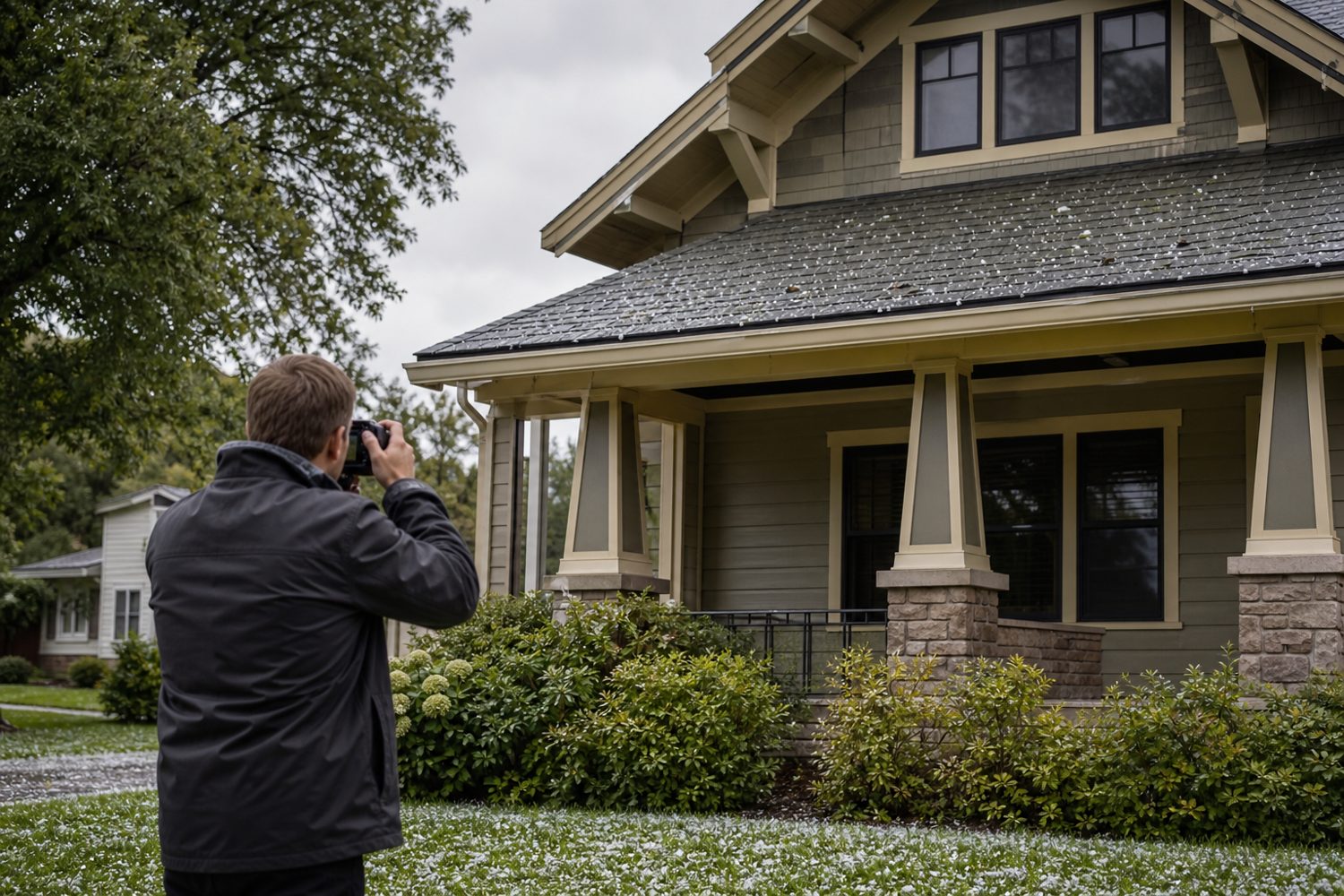
Do not climb a wet or hail-covered roof. Photograph from the ground, note interior moisture, move belongings from active leaks and use qualified help for temporary protection.
Avoid downed lines, unstable branches and slippery roof access. Control interior water only where it is safe.
Record storm date, approximate time, observations and when damage was first noticed.
Wide and close photographs, damaged soft metals and repair invoices help establish what changed.
Hail evidence is read across shingles, vents, flashing, gutters and nearby elevations. Wind is evaluated through lifted or creased tabs, displaced edges, fastening patterns and exposure. We do not promise claim outcomes; coverage decisions belong to the insurer under the policy.
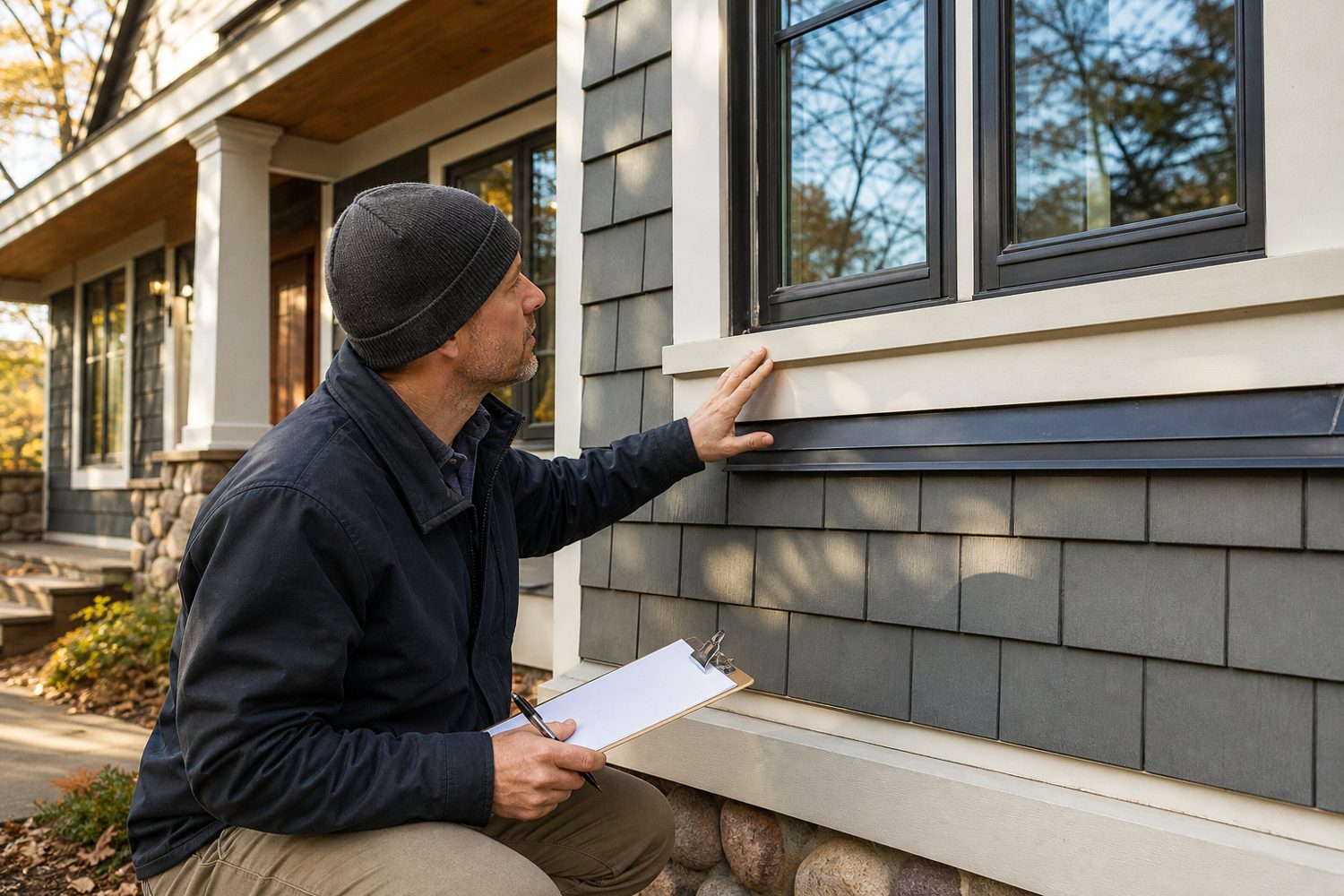
Emergency measures should be documented and reversible where possible. The permanent scope then accounts for code requirements, matching limitations, ventilation, flashing and interfaces with undamaged work.
Stop active entry without concealing the cause.
Separate storm effects, age, maintenance and prior installation issues.
Coordinate approved work and retain a complete closeout record.